
Resistance training for older adults: what the science says (and what to do about it)
In Short: resistance training is the single most powerful intervention we have to preserve muscle, strength, independence and brain health as we age. The biology sounds technical, but the practical rules for real people are simple: train consistently, lift heavy enough, recover well and you will improve function, health and longevity.
Why this matters
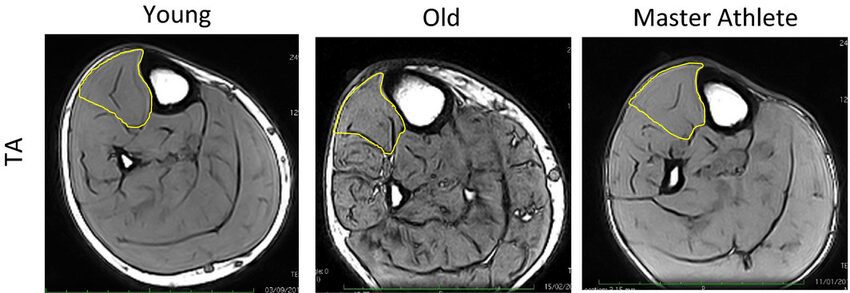
As we get older we lose muscle mass and strength, a process called sarcopenia. From a sports‑science point of view, this isn’t just cosmetic: less muscle means lower metabolic health, poorer balance, higher fall risk and reduced ability to do everyday tasks (carrying groceries, climbing stairs, getting up from a chair). The good news: resistance training reverses much of this decline. Even people in their 70s and 80s can add meaningful muscle, increase strength and improve quality of life.
The biology (in plain English)
Below are the key mechanisms that explain why lifting weights works.
1. Muscle protein synthesis (MPS) vs. breakdown
Muscles are in constant turnover: a balance between building (MPS) and breaking down. With age, the MPS response to protein and activity blunts (called “anabolic resistance”). Resistance training restores sensitivity: a bout of lifting triggers a larger MPS response, so over time you gain net muscle.
2. Motor units and neuromuscular function
Strength is not just muscle size, it’s also how well your nervous system recruits muscle fibres. Resistance training improves coordination and the brain’s ability to fire motor units quickly and efficiently, which is why elderly people often get strength gains faster than visible muscle gains early on.
3. Satellite cells & repair
Muscle stem cells (satellite cells) help repair and grow muscle. Training stimulates these cells to activate and fuse, supporting hypertrophy and recovery. While their activity falls with age, training partially restores it.
4. Hormonal and metabolic effects
Lift heavy and your hormones (insulin sensitivity, growth hormone response) improve. That means better blood sugar control, lower fat, and better cardiovascular risk factors over time.
5. Brain and function
Resistance training improves cognition, mood and sleep. The mechanisms include increased blood flow, anti‑inflammatory effects and growth factors (like BDNF) that support neural plasticity.
What the hard science shows
Large reviews and randomized trials consistently show that resistance training in older adults:
- Increases muscle mass (lean body mass) and cross‑sectional area.
- Improves maximal strength (1RM) and functional strength (sit‑to‑stand, stair climb).
- Reduces fall risk by improving balance and power.
- Improves metabolic markers (HbA1c, insulin sensitivity) and blood pressure in many cases.
Importantly, dose matters: heavier loads and progressive overload give bigger results, but even low‑load progressive resistance helps if high loads are not possible.
Practical training rules (simple and evidence‑based)
Below are the rules that matter most if you’re coaching older clients or training yourself.
1. Train at least 2× per week (ideally 3×)
Two sessions are the minimum to produce changes in strength and muscle mass; three provides faster gains and more room for progression. Sessions can be full‑body or split, but each major muscle group should be stimulated at least twice per week.
2. Use progressive overload
Either increase weight, add reps, or reduce rest over time. Progression, not one single session is the key driver of adaptation.
3. Aim for a mix of loads
- Heavy (~70–85% 1RM) for 3–6 reps × 3–5 sets increases maximal strength.
- Moderate (60–70% 1RM) for 8–12 reps × 2–4 sets promotes hypertrophy and is easier for many older clients.
- Light with high reps can also increase MPS if taken close to fatigue, useful if joints limit heavy loading.
4. Prioritise compound movements
Squat/hinge (sit‑to‑stand, deadlift), pressing, rowing, loaded carry and core anti‑rotation. These translate to functional tasks and build robust movement patterns.
5. Include power & balance work
Power (explosive sit‑to‑stand, medicine‑ball throws) improves rate of force development, critical for fall prevention. Balance training and single‑leg work reduce asymmetries.
6. Don’t skip recovery & protein
Older adults need adequate protein (aim ~1.2–1.6 g/kg/day, distributed across meals) and sleep. Post‑workout protein (20–40 g) boosts MPS when paired with resistance training.
7. Safety first, modify not avoid
Start with technique, use machines if needed, slow progress with painful joints, and monitor blood pressure and cardiovascular symptoms in high‑risk clients. Most older adults can safely lift heavy with appropriate programming.
Sample 3×/week programme (for a fit older adult)
Session A – Strength Focus
- Warm‑up: 5–10 min bike + mobility
- Back squat or box squat: 4×5 @ 75–80% 1RM
- Barbell row or single‑arm row: 4×6–8
- Romanian deadlift: 3×6–8
- Overhead press (DB): 3×6–8
- Core: Pallof press 3×10/side
Session B – Hypertrophy / Power
- Warm‑up: dynamic mobility
- Deadlift variation: 3×4–6
- Leg press or split squat: 3×8–12
- Incline press: 3×8–12
- Box jumps or explosive sit‑to‑stand: 4×3–5 (or fast concentric reps)
- Farmer carry: 3×40 m
Session C – Mixed functional
- Warm‑up: band work + activation
- Goblet squat: 3×8–10
- Pull‑ups or lat‑pulldown: 3×6–10
- Kettlebell swing: 3×12–15
- Step‑ups: 3×8/leg
- Balance circuit: single‑leg stand, heel‑toe walk, 3 rounds
Notes: scale load to ability. If joint pain limits heavy squats, use split squats or leg press. Power work can be replaced by fast concentric reps if impact is a concern.
Common myths (busted)
- “Older people can’t build muscle” – false. Gains may be slower, but clinically meaningful hypertrophy and strength improvement occur even in the 80s.
- “Heavy loads are dangerous” – heavy, well‑coached lifting is safe and more effective than endless light, non‑progressive training.
- “Cardio is enough” – endurance helps heart health, but it won’t prevent sarcopenia like resistance training will.
How to start safely (for non‑gym people)
- Get a short physical screen (GP clearance if cardiovascular risk exists).
- Start with twice‑weekly sessions for 6–8 weeks focusing on movement quality and progressive overload.
- Use a coach or small group for accountability, older adults who train with supervision stick with programmes and get better outcomes.
Final practical checklist (for coaches & clients)
- Train 2–3× per week with progressive overload
- Prioritise compound lifts and power twice weekly
- Eat 1.2–1.6 g/kg protein per day, spread across meals
- Sleep 7–9 hours and manage stress
- Monitor blood pressure and adjust loads for medical limitations
- If unsure, use a qualified coach to build a personalised plan
Want a program built for veterans and people like you?
Our Cohort Veteran program (50+) is especially designed to counter age related muscle loss and continue to build strength and functional muscle mass.👉Join Here
Join our online coaching to get a personalised plan, weekly check‑ins, video feedback, and constant support to deliver training around your life.👉 Apply for coaching to see how we can make your training simple, effective and sustainable.